



 11 / 20

WINTER 2015 | MARINE TECHNICIANTODAY
11
TECH TALK
Ethano l ,
also
commonly
called ethyl alcohol,
drinking alcohol, or
simply alcohol is
the principal type
of alcohol found
in alcoholic bever-
ages, produced by
the fermentation
of sugars by yeasts
(courtesy Wikipedia)
. Simply put, ethanol
should remain a beverage not a fuel. Consum-
ing great quantities of corn to produce ethanol
adversely affects the food supply for the USA
and the world.
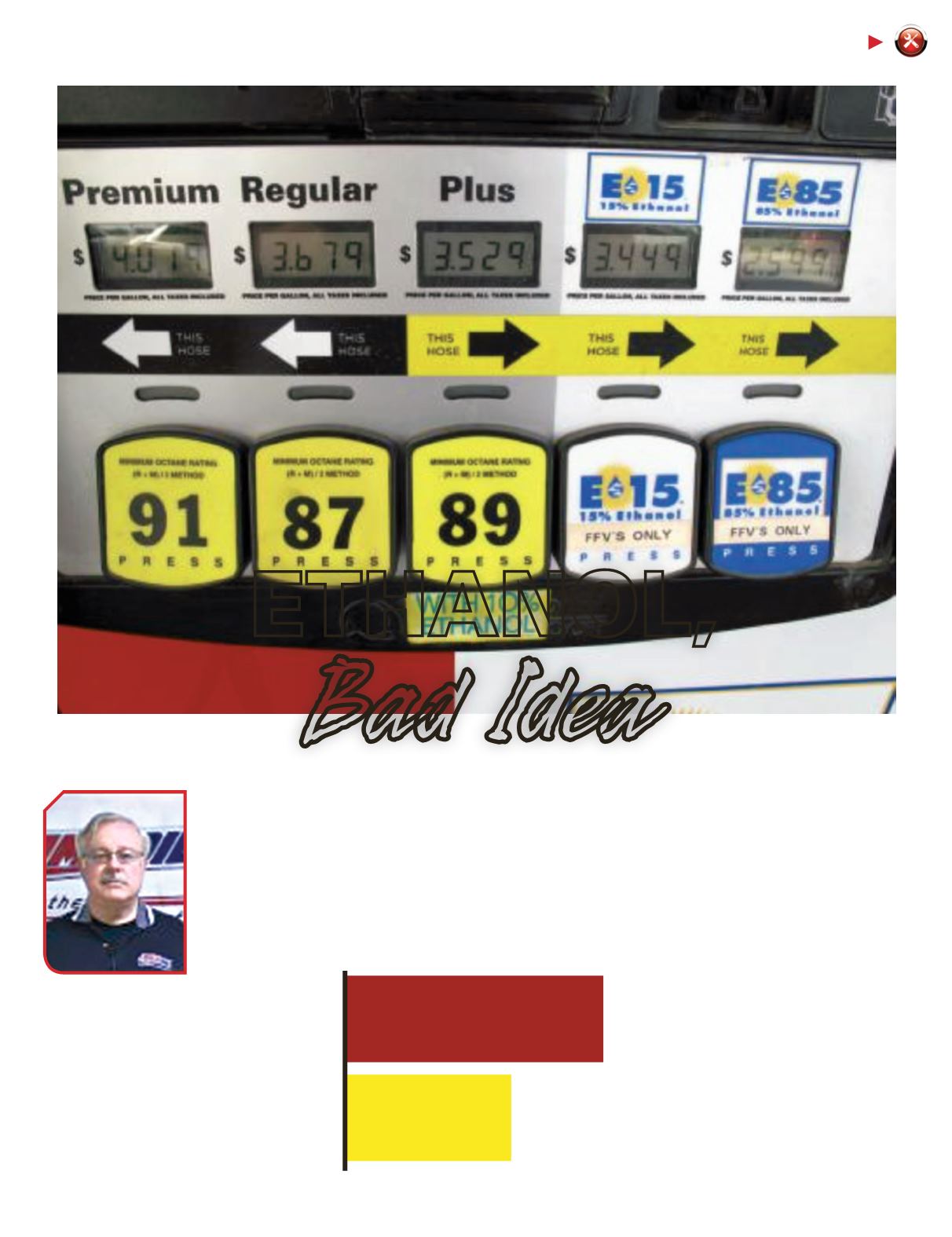
And, on top of that, ethanol is a poor fuel
in comparison to gasoline. So why are we
using billions of gallons of ethanol as fuel
every year in the United States? As usual, it
is not technology; it is money and power.
Congressman and Senators from the Midwest
states where corn is king are using their
positions to create government mandates for
ethanol use. Of course, this is good for corn
prices and creates an additional market for
corn but at what cost to consumers? In this
article, I will concentrate on how ethanol
impacts the Marine industry and offer some
ways to deal with the effects of ethanol on
marine engines.
When I say ethanol is a poor fuel, I need to
back that up with facts. In chemical jargon,
ethanol is less energy dense than gasoline.
This means, that ethanol contains less BTUs
per pound mass than gasoline. BTU stands
for British thermal unit and it is a measure of
how much heat energy can be produced by
converting a pound of mass into heat energy.
This is more complicated than is necessary for
this article but this definition is sufficient for
this discussion. So just how much less energy
By DanWatson
Bad Idea
ETHANOL,
ONE GALLON:
a comparison
Regular Ole Oil-Based Gas:
124,800 BTU
Corn Oil (E85):
80,000 BTU
1.56 gallons of E85
takes you as far as
1 gallon of gas
Figure 1