


 13 / 20

WINTER 2015 | MARINE TECHNICIANTODAY
13
TECH TALK
be created. Florida is a state where the MTBE
additive for non-ethanol gasoline and ethanol
gasoline are not compatible. Best practice
use one or the other, do not go back and for
between the two.
3. Do the maintenance.
Fuel filters are more important than ever
when using ethanol gasoline. Change filters
on time and if you don’t have a good filter /
water separator then have one installed.
4. Be alert.
Use your ear and you experience with your
boat to detect engine problems before
damage is done. Water laced fuel will not run
well and run-ability problems can be the first
sign of ethanol related problems.
5. Use a fuel system cleaner.
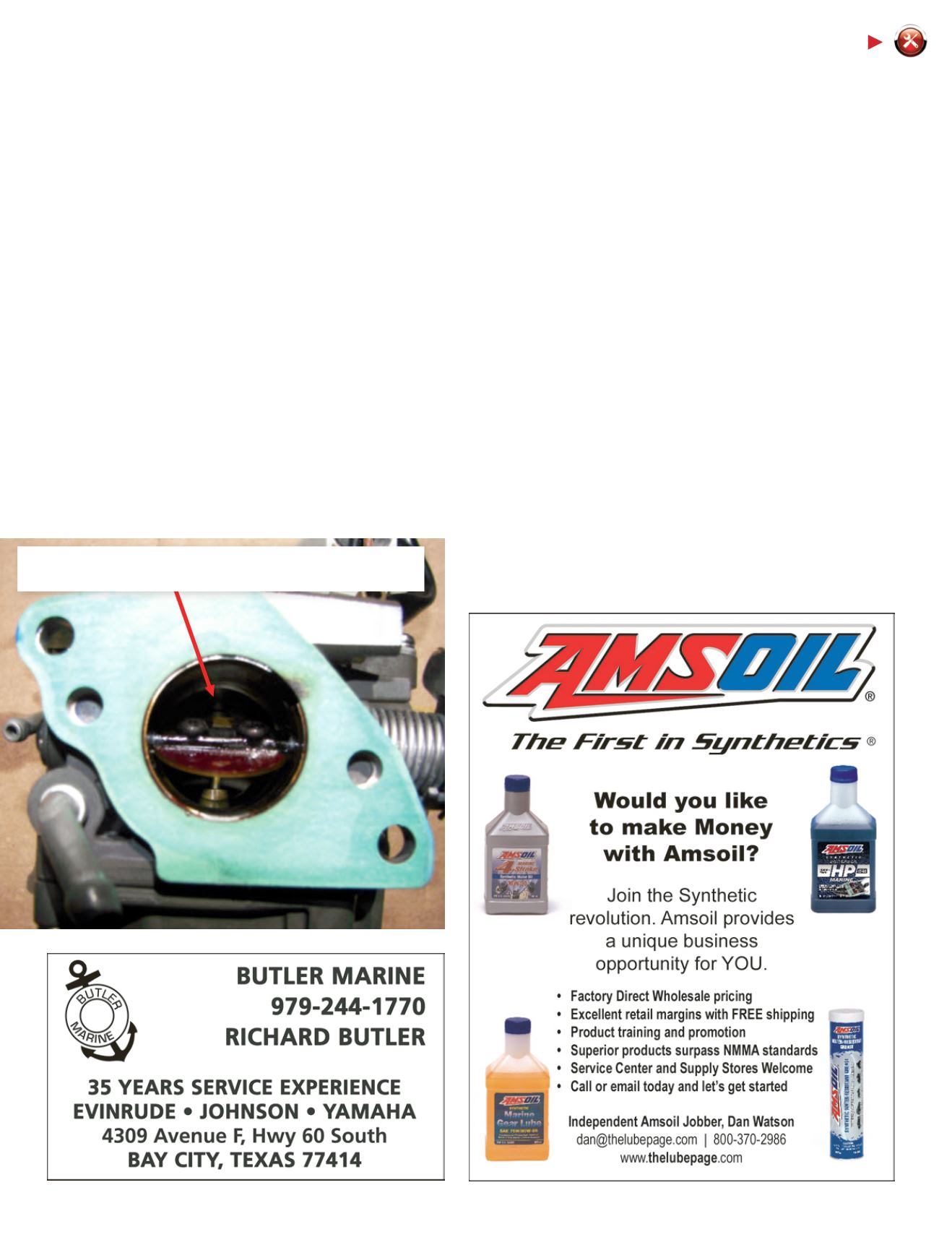
In early stages of ethanol gasoline varnish
problems, see figure 4; a quality fuel system
cleaner may eliminate problems. Caution must
be exercised when choosing an additive to
find an additive that plainly list cleaning as an
attribute. There are several ethanol additives
that are designed to prevent separation but
are NOT designed to remove deposits. No
additive
can restore
damaged fuel or convert
ethanol to regular gasoline; don’t be misled by
these stated or inferred claims.
What can you do with ethanol gasoline that has
suffered separation? This is detected by seeing
milky water in the fuel filter / water separator.
It is possible to drain the bottom of the tank (I
would use 10% of the volume as a guide) to
remove the water ethanol solution. Now you
have to add an octane boost additive. Ethanol is
an octane additive and when it has separated
and joined with water it may be depleted. The
remaining gasoline may have insufficient
octane for the engine to run appropriately and
it’s possible the low octane fuel could cause
damage. Conservatively, it may be best to
simply drain the fuel tank completely.
Ethanol gasoline has cost boaters a fortune,
so what kind of relief can we expect from the
government? None! Even worse than no relief,
the EPA has authorized E-15 ethanol. This is
not mandatory but confusion is going to be
the watch-word. For marine applications the
advice is simply don’t use E-15. If you have
to pay extra for non-ethanol gasoline, then
so be it, the use of E-15 could be the most
expensive choice you have ever made.
Questions or comments contact:
Dan Watson Certified Lubrications Specialist, STLE
danwatson@thelubepage.com www.thelubepage.com• 800-370-2986
Figure 4
The varnish kept the butterfly from opening properly. The butterfly shaft
would bind up and was slow to actuate.