



 12 / 20

12
MARINE TECHNICIANTODAY | WINTER 2015
TECH TALK
is available from ethanol than gasoline? Well,
all ethanol is not the same and there are quality
differences in the ethanol produced. Various
sources list ethanol as having approximately
65% of the energy of gasoline, see figure 1.
This means if you had a vehicle rated at 20
mpg on gasoline and you could convert it to
100% ethanol it would get 13 mpg. So if you
add 10% ethanol to gasoline you can lower
fuel economy by approximately 4%. This 4% is
purely based on energy ratings and field tests
indicate the effect on the fuel management
systems of various models is closer to 8% to
10% reduced fuel mileage. This same effect
is apparent in marine applications resulting in
higher fuel consumption rates.
Low energy and poor performance are bad
enough, but that can be tolerated; it’s the
chemical effects on the fuel system that can
become catastrophic. To understand how
ethanol affects the fuel system it is necessary
to understand the properties of ethanol, let’s
take a look:
• Ethanol produces less energy (BTUs)
than an equivalent unit of gasoline,
previously discussed.
• Ethanol is hygroscopic, meaning it has a
strong attraction to moisture.
• Ethanol increases the amount of water
accumulating in fuel tanks, see figure 2.
• Ethanol’s usable life span is less than
gasoline and could be less than the normal
length of off-season boat storage.
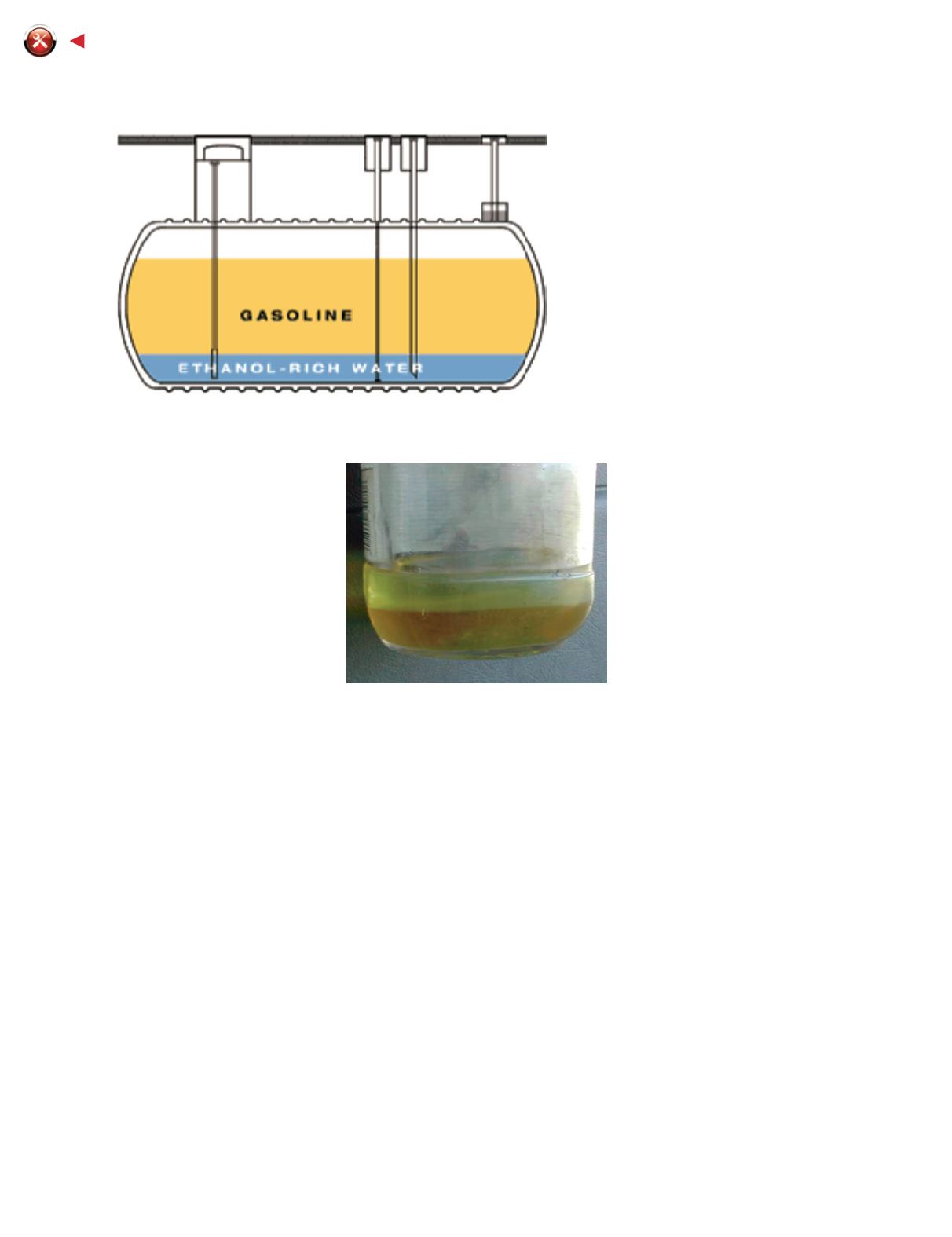
• Ethanol can become separated from
gasoline and combines with water to form a
mixture of corrosive liquid that will damage
components and prevent starting the
engine, see figure 3.
• Ethanol is an aggressive solvent, meaning
it will clean all sludge from the fuel tank
walls and in some cases attack certain
resins and fuel lines and seals.
Each one of the characteristics of ethanol
creates problems for boaters so let’s drill
down into the specifics.
Hygroscopic does not mean that ethanol
literally sucks water out of the humid
air. It does mean that ethanol will readily
attract liquid water. So in most fuel tanks
where fuel tank walls are exposed to the
air, condensation occurs. Over time of the
Figure 2
Figure 3
boat sitting this condensation can produce a
significant amount of water. This condensation
is no different in any fuel tank regardless of
the type of fuel. The problem with ethanol
occurs when the ethanol separates from the
gasoline and then readily combines with the
water from condensation. Now we have the
corrosive mixture of poorly burning ethanol
and water. Since the volume of ethanol
(10%) can combine with the water the water
(mixture) volume is much larger than normal.
A solvent is a substance that can dissolve
other soluble materials. Clearly, this can have
an effect on residue in the fuel tank. As the
normal existing varnish and sludge begins to
breakdown on the tank walls it breaks loose
and goes into solution. This mixes with the
water and in some cases ethanol that has
come out of solution to form a concoction that
will clog up carburetors and fuel injectors.
Looking at these potential disasters, there
must be some precautions or measures that
can be taken to mitigate the effects.
1. Limit storage time
for ethanol gasoline.
Best practice is to use ethanol gasoline in 90
days. Ethanol gasoline absorbs water and over
time condensation in the gas tank will provide
sufficient water to cause problems. Fuel tanks
should be
topped off
and gasoline stabilizers
added for long term storage. Additionally,
ethanol additives designed to prevent ethanol
from coming out of solution should be added
for storage of fuel over 90 days.
2. Use ethanol-free gasoline.
Choosing to avoid ethanol is certainly the
most secure way of avoiding any ethanol
problems. Many service stations and most all
marinas offer ethanol free gasoline. Do NOT
mix non-ethanol fuel with ethanol gasoline
if the fuel will be in the gas tank for more
than 48 hours. Ethanol is not compatible with
some additives used for non-ethanol gasoline
(specifically MTBE) and if the incompatibility
exist in your location and the fuel is together
for more than 48 hours, a brown sludge will