


 29 / 44

Spring 2016
NCRWA.COM27
feature
O
n the heels of the North Carolina General
Assembly’s, Article 8A, Underground Utility
Safety and Damage Prevention Act that went
in effect October 1, 2014; there have been
some questions on how to provide a more
locatable underground utility system. The
statute provides that all facilities used for
producing, storing, conveying, transmitting,
or distributing communication, electricity,
gas, petroleum products, hazardous liquids,
water, steam, or sewage shall be electronically
locatable. While much in the statute details
the responsibilities of the excavator before
excavation, little detail is given on how to
provide for a locatable system from the onset
of design and installation of the new utility.
When designing a water or sewer piping
system how seriously is the design
or specification of tracer wire taken?
Unfortunately, all too often the tracer wire
specification is vague and overlooked. Most
water department specifications call out the
fire hydrant specifications down to the threads
on the riser, but tracer wire has been taken
far too lightly with very broad specifications.
Some water departments in parts of the
country don’t use tracer wire at all. Warning
tape, detectable tape, bare copper, coated solid
copper, copper clad steel, stainless steel, and
stranded copper or stranded stainless steel are
all products being used.
What are the right products to use? Wire
is only a small piece of the puzzle. Proper
installation and location to the pipe,
termination of the wire and connecting the
wire properly when spicing or connecting to
a service are very important as well.
Many municipalities are writing too broad of
a specification for tracer wire. An example
would be “Install #12 solid copper wire
with jacket”. That’s it… So the contractor
runs to a local supply house and buys the
least expensive wire, usually THHN. The
nylon PVC coating on THHN will typically
last around two years before it deteriorates
and exposes the copper. THHN is not made
for direct bury. Unprotected copper, over
time will turn back to its original state or
earth. The locate signal will no longer
remain in the wire path, but instead will
bleed off into the ground. Articles as long
ago as 2003 warning of the improper use of
THHN as a tracer wire has been written by
engineers and regulatory agencies. Look at
your current specification; tighten it up to
provide for a jacket suitable for direct bury
on the wire, and do not allow THHN.
What should be considered when
writing a tracer wire specification?
• Wire Size or Gauge (AWG)
• Jacket Color
• Jacket/Coating type
• Wire Types - Copper Clad Steel or Copper
• Proper connections
• Placement of the wire in regards to pipe
• Termination method for wire, test stations
and connections
• Specification for the proper wire for each
use, be it open ditch/direct bury, pipe
bursting and directional boring (it makes
a difference)
• Inspection and Testing upon completion
of a new system
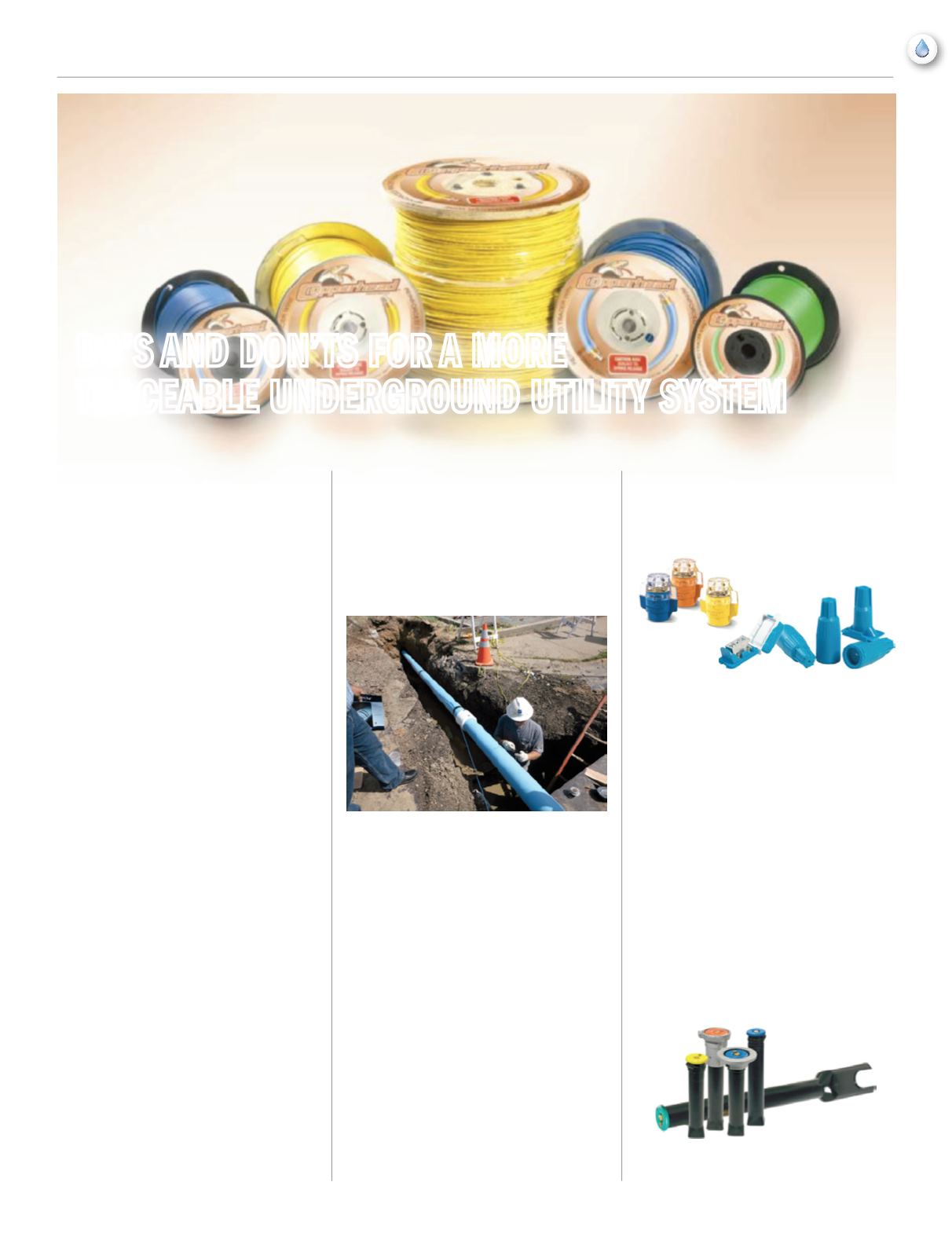
DO’S AND DON’TS
FOR A MORE
TRACEABLE UNDERGROUND UTILITY SYSTEM
By Brad Penley, Porter Associates