


 32 / 44

A
30
NCRWA.COM|
Spring 2016
feature
s we have seen in the past years, overhead
electrical lines are at the mercy of Mother
Nature. There are several reasons that power
may be interrupted to water and wastewater
facilities. The central question however
always is, “When will power be restored? “It
may take hours or it could take weeks before
power is restored. The re-establishment
of power to water and wastewater plant
facilities is vital in returning to normal
conditions and providing essential services
to protect the public health and safety. Since
the time needed to restore electrical power
can be long and uncertain, the question is if
your water or wastewater utility is prepared.
Suppose a storm hits; power is estimated
to be out for four days. Your utility needs a
generator to produce and process water. This
is not the time to be learning about what
size or type of generator is needed. That’s
something that should be taken care of
BEFORE the emergency hits. The questions
are numerous. Do you need a portable
generator, a stationary generator, or both?
How many stationary generators will be
needed? If a portable generator is chosen,
how will it be moved from site to site? Could
your utility possibly share a generator with
a neighboring system? Depending on the
water or wastewater utility’s set up, a Town
or water system may be able to provide
minimal functions with only one portable
generator. Re-locating a single generator to
multiple sites might work for some utilities
in order to maintain minimal services.
Regardless, the first step for every Town or
Utility is to choose the right generator for
the job.
By Jesse Miller — SCRWA Circuit Rider II
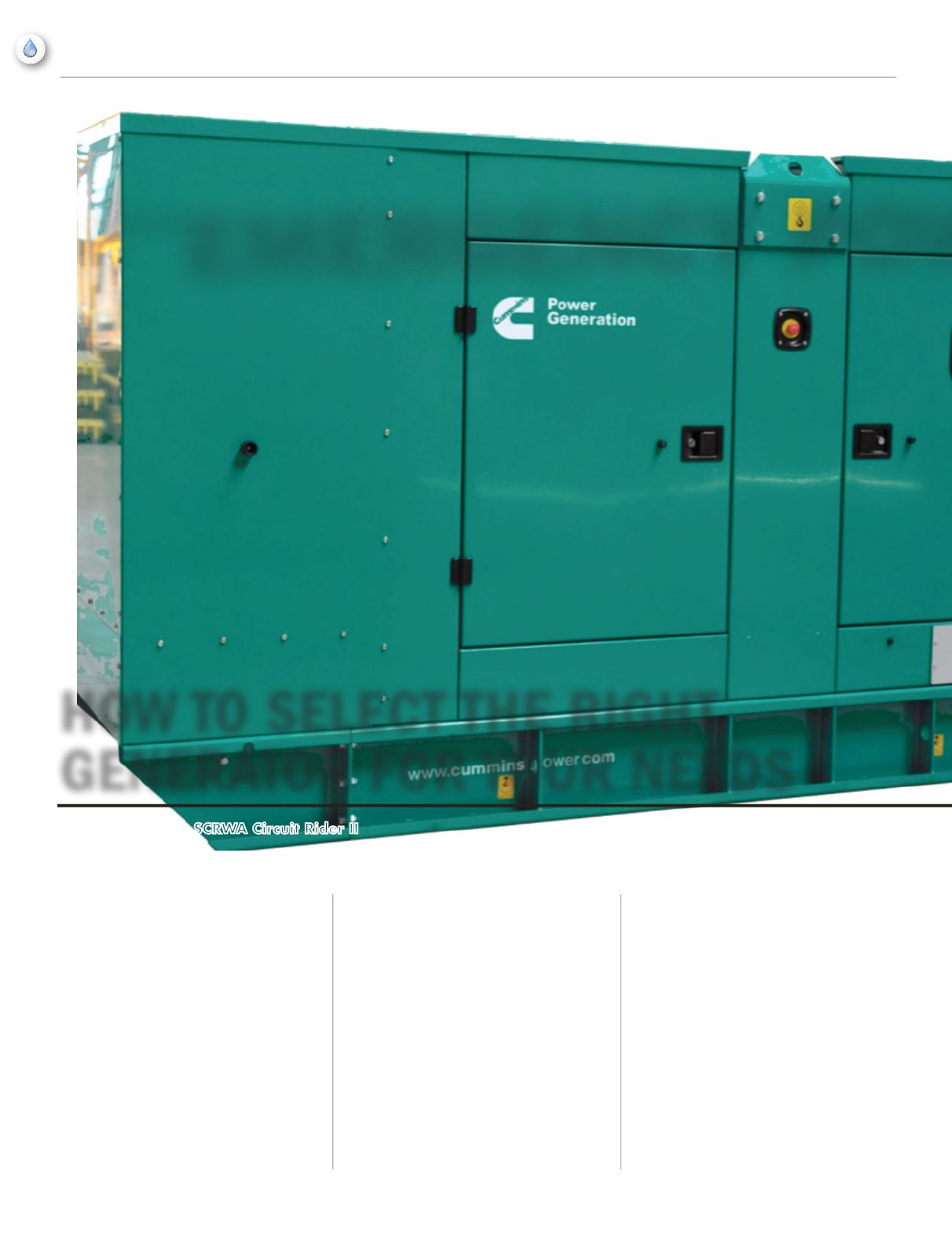
HOW TO SELECT THE RIGHT
GENERATOR FOR YOUR NEEDS
***
EMERGENCY PO